
The UAE real estate market is being reshaped by property technology. New digital solutions are being adopted across the industry. Consequently, property developers, agencies, and investors are experiencing faster operations and improved customer engagement.
Government support has also accelerated this transformation. Smart city initiatives and digital infrastructure continue to encourage innovation. As a result, businesses that invest early are positioned to gain stronger returns.
Property Technology Is Changing Traditional Real Estate
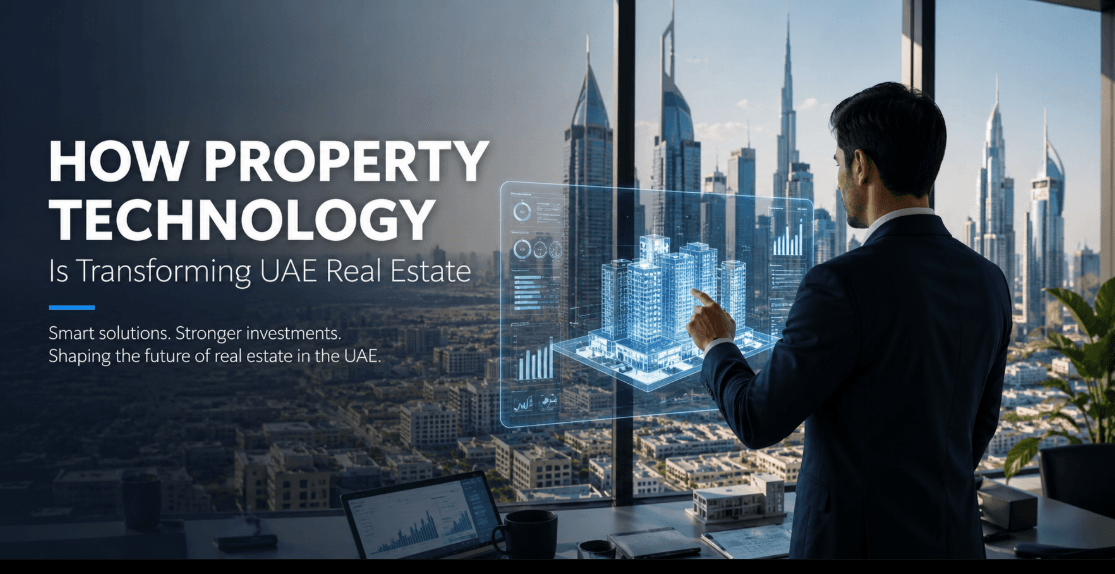
Traditional property transactions have often relied on manual processes. However, digital platforms are now replacing many time-consuming tasks.
Virtual property tours are being offered to buyers worldwide. Documents are being processed electronically. Likewise, customer communication is being managed through automated platforms.
Because of these changes, decisions can be made more efficiently. Sales cycles may also be shortened.
More importantly, international investors can explore developments without visiting the UAE. Therefore, broader audiences can be reached while marketing costs remain controlled.
Government Initiatives Are Driving Digital Growth
The UAE government has strongly supported digital transformation. Several national strategies have encouraged technology adoption across multiple industries.
Meanwhile, smart government services continue to improve business efficiency. Digital regulations have also created confidence among investors.
Cities such as Dubai and Abu Dhabi have introduced ambitious technology programs. Consequently, real estate companies are being encouraged to modernise their operations.
This environment has made innovation more accessible. As a result, technology investments have become less risky for developers and property businesses.
Smart Cities Are Creating New Opportunities
Smart cities are changing how communities are designed and managed.
Modern buildings are increasingly connected through intelligent systems. Energy consumption can be monitored automatically. Security systems can also be managed more effectively.
Furthermore, residents expect connected living experiences. These expectations continue to influence purchasing decisions.
Developers are responding by integrating smart technologies into residential and commercial projects. Consequently, properties become more attractive to buyers and tenants.
Businesses that embrace these trends may strengthen their competitive position within the market.
Better Customer Experiences Through Digital Innovation
Customer expectations have evolved rapidly. Buyers now expect faster responses and richer property information.
Fortunately, property technology makes these expectations easier to meet.
Interactive property visualisations provide realistic project previews. Virtual tours allow buyers to explore developments remotely. Digital twins can also improve planning and project management.
As a result, confidence is built before construction is completed.
Additionally, sales teams are provided with stronger marketing tools. Therefore, conversations with prospects become more productive.
Improved ROI for Property Businesses
Technology investments are often evaluated through measurable returns.
Fortunately, property technology offers several opportunities to improve return on investment.
Marketing campaigns can reach qualified audiences more effectively. Sales presentations become more engaging. Customer enquiries may also be managed automatically.
Consequently, operational costs can be reduced while productivity increases.
Project planning can also be improved through better data analysis. Likewise, maintenance costs may decrease when digital monitoring systems are implemented.
Although initial investments are required, long-term savings are frequently achieved.
Data Is Supporting Better Business Decisions
Reliable information has become one of the industry’s greatest assets.
Property technology provides access to real-time market data. Customer behaviour can also be analysed more accurately.
Therefore, developers can identify demand patterns earlier. Marketing strategies can then be adjusted with greater confidence.
Additionally, predictive analytics helps businesses prepare for future market changes. This reduces uncertainty while supporting sustainable growth.
The Future of UAE Real Estate
Digital transformation is expected to continue across the UAE property sector.
Artificial intelligence, smart buildings, and immersive technologies will likely become standard business tools. Consequently, customer expectations will continue to rise.
Businesses that delay technology adoption may struggle to remain competitive.
Meanwhile, organisations that invest in digital innovation are likely to improve efficiency, customer satisfaction, and profitability.
Property technology is no longer viewed as an optional upgrade. Instead, it has become an essential business strategy for long-term success.
As the UAE continues building world-class smart cities, technology will remain central to future real estate development. Companies that embrace innovation today will be better positioned to lead tomorrow’s property market.
